Training Movement for
Volleyball
A Joint
by Joint Approach
For training, it's important to realize not all joints in the body have the same needs. In the following table are the primary needs joint by joint.
A holistic approach to improving mobility and stability
Think of the body as a stack of joints.
Each joint or series of joints has a specific function and is prone to specific, predictable levels of dysfunction.
As a result, each joint has specific training needs.
You'll notice as you look at the joints from the ground up, joints
simply alternate between the need for mobility and stability as we move
up the chain.
For example, the ankle needs increased mobility and the knee needs increased stability. Next, the hips need more mobility.
You're probably wondering what does this have to do with volleyball?
Will this make me a better volleyball player? The answer is yes.
Jump Higher and Spike Harder in Volleyball
Joint by Joint Training
Over the past twenty years or so, the average gym-goer has progressed from the bodybuilding approach of
training by body part to a more intelligent approach of training by movement pattern.
If you're thinking of training "movement not muscles" this is closer to the right mindset.
Even better, think of taking a "joint by joint" approach to your training.
The thing is, problems at one joint usually show themselves as pain or a problem in the joint above or below.
| Joint | Needs |
| Ankle | Mobility |
| Knee | Stability |
| Hip | Mobility |
| Lumbar Spine | Stability |
| Thoracic Spine | Mobility |
| Scapula | Stability/Mobility |
| Gleno-humeral | Mobility |
To understand this better, lets think about the barbell back squat as an example.
How many people do you know have low back pain when they squat?
Loss of hip mobility could be the cause.
Loss of function in the joint below (in the case of the low back, the
hip) seems to affect the joint or joints above (lumbar spine).
Basically, if the hip can't move, the lumbar spine will.
The problem is that the hip is built for mobility, and the lumbar spine is built for stability.
When the mobile joint (in this case the hip) becomes immobile, the
stable joint (the lumbar spine or low back) is forced to move as
compensation, becoming less stable and subsequently painful.
- Lose ankle mobility, get knee pain.
- Lose hip mobility, get low back pain.
-
Lose thoracic mobility, get neck and shoulder pain (or low back pain).
Basically, if you lack hip mobility or ankle mobility, you'll lean forward in the squat and shift stress to the back.
If you enjoyed these tips and would like to keep it close to you at any time, just save this pin to your Pinterest Volleyball Training Board.
Textbook Anatomy vs Functional Anatomy
Role of the Glutes
In anatomy class, you probably learned about the movement of the hips
being "open chained".
Open-chain movements of the hips (specifically the gluteus maximus)
include hip extension, hip abduction, and hip external rotation.
In the real world, the gluteal muscles also resist/control hip flexion,
adduction and internal rotation.
Why is this important for volleyball?
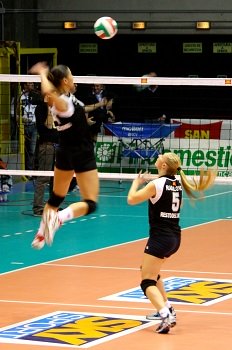
Well, think about what a volleyball player does as they approach to hit.
What happens with your glutes and lower body as you approach?
Training for Volleyball Joint by Joint
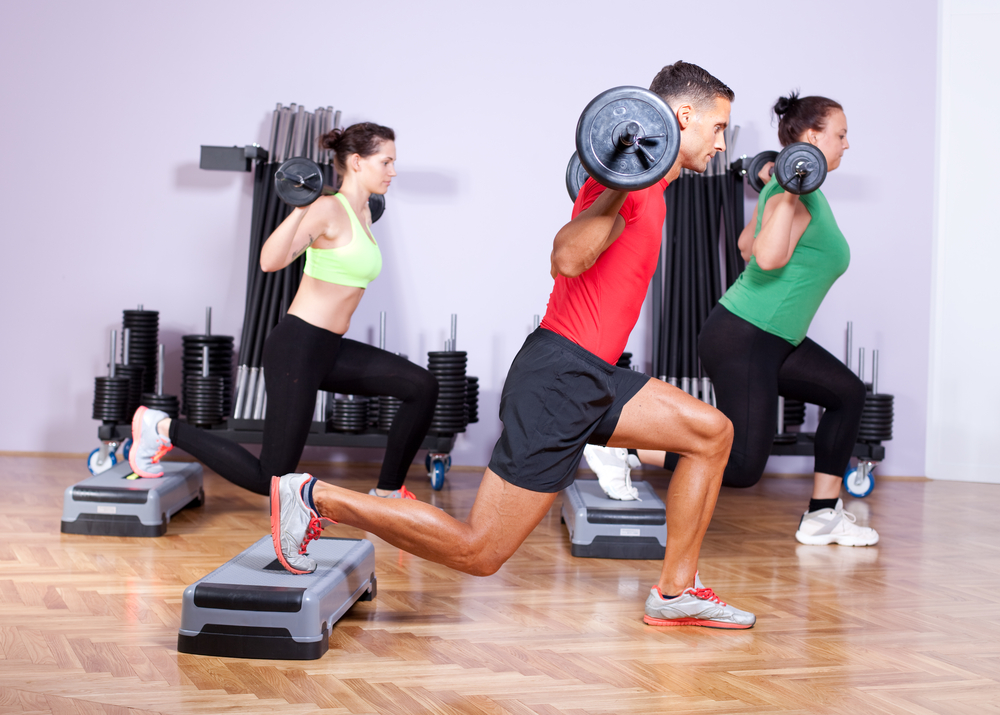
Think about what his glutes are doing in this position.
1. They are controlling motion.
2. They are resisting flexion.
3. They are
resisting adduction and internal rotation of the hip.
4. During this movement, he's using his lower body like it's a rubber band. He's storing that energy
and getting ready to explode out. He can then extend, abduct, and externally rotate the hips.
Its important to get away from the thinking that muscles just create movements.
Muscles control movements, store energy, and a lot more things.
Progression for Training
The following is the proper progression for joint by joint training.
- Start with alignment/posture.
- Second, focus on motor control.
- Next is endurance (mainly build endurance for the inner core).
- Last, focus on strength and power.
Improve Knee and Back Health by Working the Hips
Common knee problems such as ACL injuries (especially in female
athletes) are often related to a lack of stability and mobility in the
hips. This lack of stability and mobility at the hips
causes the knee to work to compensate for the hip.
Hips are often said to be the most overlooked area when it comes to decreasing the potential for injury.
Hip stability and mobility strengthening exercises
will help you maximize efficiency in and around the hip, thus minimizing the chance for injury.
Glute training is important for preventing injuries and maximizing hip strength and power.
Volleyball › Smarter Training › Joint by Joint


SAY HI ON SOCIAL:




As an Amazon Associate we may earn a commission from qualifying purchases.