Volleyball Formations
Serve Receive Alignment Tips
Understanding volleyball formations is important to be successful in volleyball.
Just before your opponent puts the ball into play with a serve, your team gets ready by lining up on the court in serve reception.
When deciding on what formation, there are two main things to consider...
- How effective it is get a successful pass
- and how effective is the attack hit that results from the pass and set
The object of serve receive is to successfully direct the ball to the
target player. The target is usually the setter that moves to the target
area ready to set the ball.
At the beginning of serve receive, most teams position the setter about
10 feet off the net near the right sideline. As the ball is being
"passed" the setter moves toward the target area as the served ball is
in the air.
Most Common Formations
The most commonly used volleyball formations are...
- The U formation. The U serve receive formation uses 4 players lined up to receive the serve.
- The W formation. The W serve receive formation uses 5 players lined up to receive the serve.
Variations of the W Serve Receive Formation
Split Formation
A good formation for when the middle player is one of the better players on the
team.
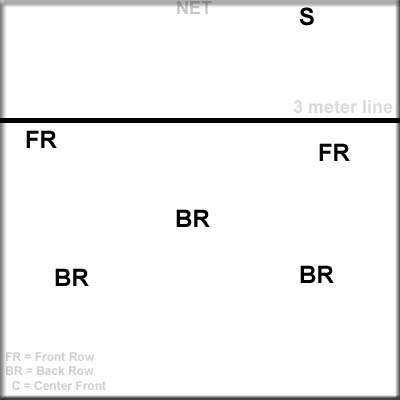
Split Formation
Right and Left Slant Formation
The right and left slant formations are good for when you want to have the setter and quick attackers closer to the net.
Moving the quick attacker closer to the net brings them away from having
to pass the serve which makes it easier for them to attack.
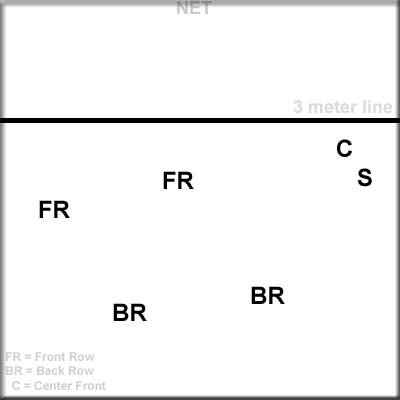
Left-Slant Formation
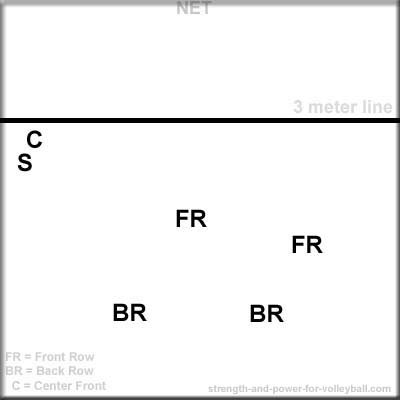
Right Slant Formation
Shift Left Formation
This is a popular formation for when running a 5-1 and only having two attackers in the front row.
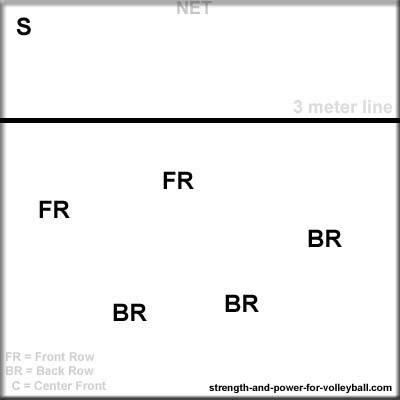
Shift Left Formation
Shift Right Formation
A less popular and effective formation. This formation could be
effective for setting a back row attacker out of the left back position.
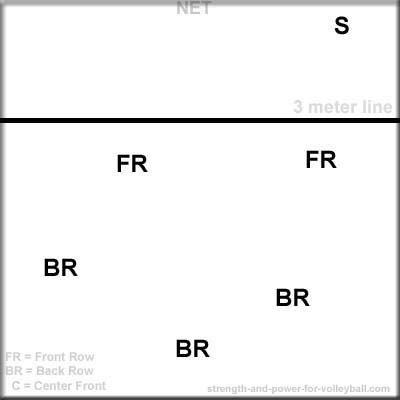
Shift Right Formation
Deep Formation
A possible formation to effectively pass a hard deep court serve. This is best when the front row players are the best passers.
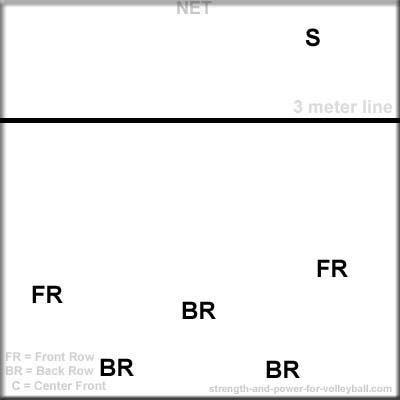
Deep Formation
Down Formation
In this formation, two back row players stand near the endline ready to make an adjustment to a deep hard serve.
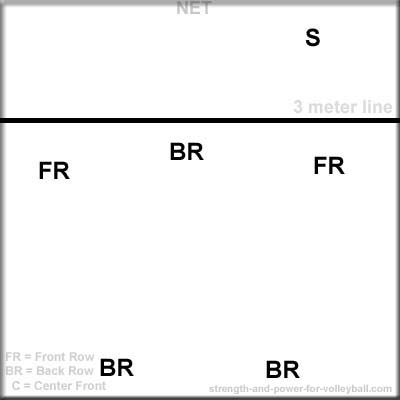
Down Formation
Shallow Formation
This formation teaches players to improve communication because of their
closeness. This is best against float serves that drop quickly to the
center of the court.
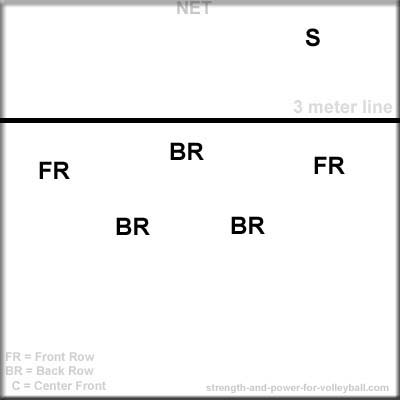
Shallow Formation
If you enjoyed these tips and would like to keep it close to you at any time, just save this pin to your Pinterest Volleyball Training Board.
Volleyball Formations Related Pages
6-2 Serve Receive
Volleyball › How to Play Volleyball › Formations


SAY HI ON SOCIAL:




As an Amazon Associate we may earn a commission from qualifying purchases.