Stretching Cool Down for Volleyball
Flexibility and Strengthening Muscles
A cool down for volleyball is important for recovery, performance, and preventing injury.
We all know flexibility training should involve both dynamic and static stretching exercises. Stretching muscles after a workout is especially important for helping your body recover for the next training session.
Flexibility is defined as a range of motion around a joint.
Stretching is a means of increasing flexibility.
A limited range of motion can compromise your volleyball playing skills or affect your ability to speed up or slow down when making plays on the court.
Before Practice or Competition
After a warm up, static stretching can be effective for increasing the elasticity of muscles that are tight and help decrease the likelihood of injuries. This is why a cool down for volleyball is important.
When static stretching for increased muscle length, a good time to static stretch may be after a foam roll routine.
If static stretches are performed prior to a workout requiring explosive movements, the stretches may be counterproductive. Muscles are less responsive during the time immediately after static stretching. Static stretches confuse muscle and tendon reflexes which may throw off an athletes coordination.
A volleyball warm up should contain dynamic flexibility exercises. Dynamic means the stretching is active. Stretching while you're moving warms up your body, preparing for movement while also activating your nervous system.
After Practice or Competition
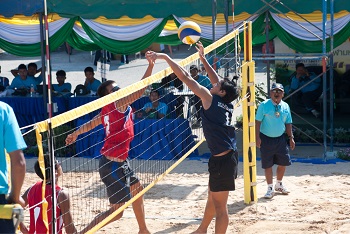
Static stretching after a workout may be the best time because your muscles are warmed up. The increased muscle temperature increases the elastic properties of the muscle and therefore allows for a greater stretch. Stretching can be used as part of a cool down for volleyball which will help restore the muscle back to resting length, reduce soreness, and enhance recovery for the next volleyball workout.
Only Static Stretch with Reason
A cool down for volleyball is especially important for lengthening tight muscles.
Static stretching often feels good and can be relaxing, but static stretching isnt always necessary. Only static stretch with a purpose. If you already have adequate flexibility, you are probably wasting your time. In fact, overly lengthened muscles can lead to problems such as muscular imbalances, thrown off muscular firing patterns, and possibly injury.
An increase in flexibility may come at the expense of giving up stability or explosive power necessary for your volleyball performance.
A flexibility deficiency rarely occurs in isolation. Flexibility is usually related to a deficiency in strength and sometimes posture. Tight athletes have been known to significantly improve their flexibility just by participating in a balanced volleyball training program.
If you enjoyed these tips and would like to keep it close to you at any time, just save this pin to your Pinterest Volleyball Training Board.
Static Flexibility Exercises
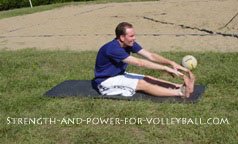
Sitting Toe Touch
Purpose:
To improve flexibility of the hamstrings and low back muscles.
Starting Position:
Sit with your torso vertical and legs straight.
Action:
Lean forward and grab your toes with your hands. Slightly pull the toes toward your upper body.
Coaching cues:
If you cant reach your toes, you can use a rope to assist the stretch.
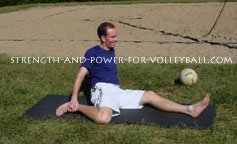
Side Quadriceps Stretch
Purpose:
To stretch the quadriceps and hip flexors.
Starting Position:
Lie on your side with your legs straight.
Action:
Grab the ankle of your top leg, flex your knee and pull your heel slowly towards your buttocks.
Semi-straddle
Purpose:
To stretch the hamstrings and lower back muscles.
Starting Position:
Sit with your torso vertical and legs straight.
Action:
Place the sole of one foot on the inner side of the other leg. The outer side of the foot should be resting on the ground. Lean forward and grab your toes of the straight leg with your hands. Slightly pull the toes toward your upper body.
Coaching cues:
If you cant reach your toes, you can use a rope to assist the stretch.
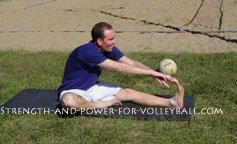
Straddle
Purpose:
To stretch your hamstrings, low back muscles, and the muscles on the inside part of your thighs.
Starting Position:
Sit with your legs straight and spread far apart.
Action:
With both hands, grab the toes of one foot. Pull your chest toward your toes. Return to the start position and repeat to the other side.
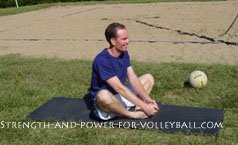
Butterfly
Purpose:
To stretch the muscles on the inside part of your thighs.
Starting Position:
Sit with your torso vertical. Bend your knees and bring the soles of your feet together. Pull your feet toward your body. Place your hands on your feet and elbows on your legs.
Action:
Pull your torso forward as you push down on your knees with your elbows.
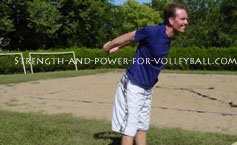
Straight Arms Behind Back
Purpose:
To stretch the chest and the front side of the arms.
Starting Position:
Stand up and place both your arms behind your back interlocking your fingers.
Action:
Extend your elbows fully. Slowly raise your arms, keeping your elbows straight.
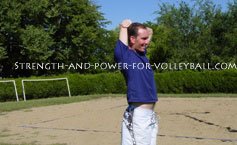
Behind-Neck Stretch
Purpose:
To stretch your triceps and back muscles.
Starting Position:
Raise your arm up and place your hand behind your shoulder while flexing your elbow.
Action:
Grab your elbow with your other hand and pull your elbow back behind your head.
Cross Arm in Front of Chest
Purpose:
To stretch shoulder and back muscles.
Starting Position:
Grab your arm just above your elbow.
Action:
Pull your arm across your chest.
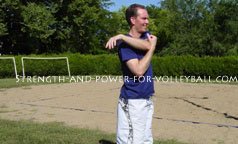
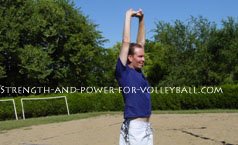
Arms Straight Up Above Head
Purpose:
To stretch your lats (back muscles).
Starting Position:
Stand with fingers interlocked and palms facing out.
Action:
Slowly straighten arms above head with palms facing up.
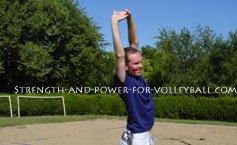
Side Bend With Straight Arms
Purpose:
To stretch your obliques (side ab muscles), back muscles, and the serratus anterior (a shoulder muscle near your scapulae and ribs).
Starting Position:
Stand with fingers interlocked and palms facing out. Slowly straighten arms above head with palms facing up.
Action:
While keeping your arms straight, lean to the side.
Flexibility training should be modified to meet the needs of each volleyball player.
Players need to be specific about their flexibility training goals. While it may seem like a good thing to increase your flexibility, increasing flexibility through static stretching isn't necessarily the best thing.
Because of the nature of their sport, it's generally more appropriate for volleyball players to focus on increasing dynamic flexibility and not so much on static flexibility.
It's usually best to perform static stretches at the end of a workout as part of a cool down for volleyball. Static stretching before a workout can actually make you less explosive.
Think of dynamic exercises as warming up the muscles for quick explosive movements. Static exercises lengthen and relax the muscles.
Cool Down for Volleyball Related Pages
Smarter TrainingVolleyball › Volleyball Conditioning › Cool Down for Volleyball


SAY HI ON SOCIAL:




As an Amazon Associate we may earn a commission from qualifying purchases.